
Quick answer
Private-label floor protection film is the same product with a different commercial layer: printing on the film or liner, a roll format that suits your channel, and packing and labelling that carry your brand, size, gauge and usage instructions. The technical film underneath can stay unchanged — which is why private label is the lowest-risk way to enter the market. What it requires from you is artwork in a usable format, a decision on the roll format you intend to sell, and a clear statement of the information your market expects to see on the pack.
Why private label changes the specification
A generic roll is bought on price. A branded roll is bought on recognition, and that changes which details matter. Gauge is no longer only a technical figure — it becomes a claim on the label that the buyer will compare with the next brand. Width and roll length stop being production parameters and become the price point on the shelf. Usage instructions, which a trade buyer never reads, become the difference between a product that works for a DIY customer and one that gets returned.
The film itself is unchanged; the specification around it is not. That is why private-label projects are usually confirmed on print and packing proofs rather than on new material samples. The technical decisions — gauge and construction — are covered in how to choose the right thickness and in self-adhesive versus standard film.
What can be printed, and where
There are two surfaces available for branding, and they behave differently:
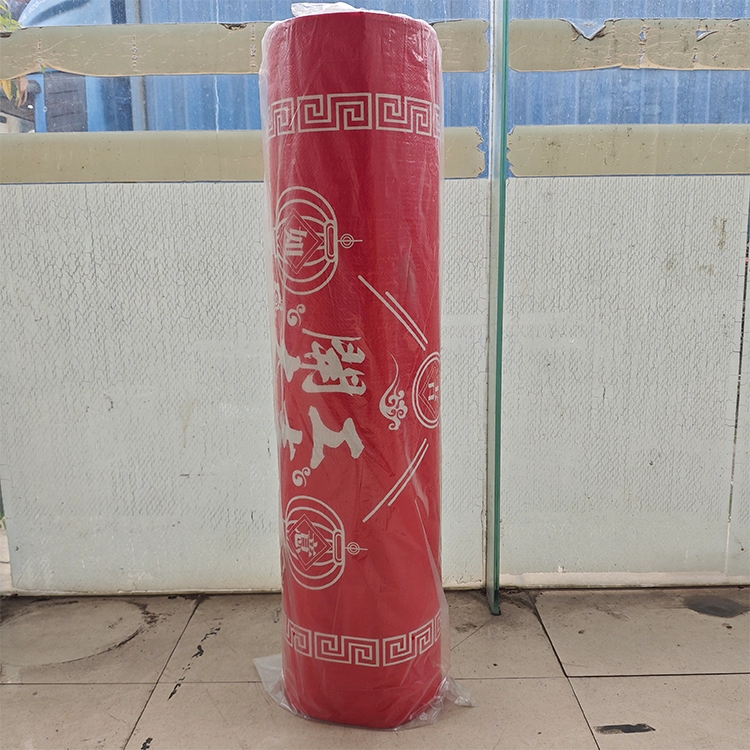
- On the film. A printed or composite construction carries your brand or instructions on the product itself. This suits film that stays visible during use and where the print is part of the product's function — for example, installation guidance printed across the roll.
- On the liner or backing. Where the film is self-adhesive, the release liner offers a clean surface for logos and directional printing, and it disappears once the film is laid.
- On the pack. Labels, sleeves and cartons carry the information a purchaser needs at the point of sale, and nothing about them affects how the film performs.
Which of these is available depends on the construction. Printing is a separate process from film production, so it belongs in the first conversation, not in the artwork handover.
Roll format: the decision the shelf makes for you
Most private-label ranges are shaped by a single question: who is buying, and what will they do with it?
| Channel | Typical format | What matters |
|---|---|---|
| DIY retail | Narrower, lighter rolls with a retail price band | Handling weight, label clarity, instructions on pack |
| Trade / contractor supply | Wider, longer rolls, often shrink-wrapped | Coverage per roll, overlap waste, carton configuration |
| Contract and project supply | Large rolls or palletised volumes | Consistency between batches, delivery scheduling |
| Bundled kits | Film plus tape in one pack | Component matching, combined labelling, one barcode |
Roll width and length also determine the core, and the core determines whether the roll fits the dispenser or applicator your customers already use. That is worth confirming before the artwork is finalised, because a change in roll format changes the label dimensions and often the carton too.
Packing and labelling: where markets differ
The information required on a pack varies by destination, and it is cheaper to design it in than to over-label afterwards. The items that most commonly need to be on the pack or label are:
- Product name and brand
- Coverage — width × length, plus the area covered
- Gauge, if it is part of your selling proposition
- Application guidance and the surfaces the film is suitable for
- Barcode, and any recycling or disposal marking the market requires
- Batch or production reference, so a reorder can be traced
Where a market requires language variants, plan them at layout stage. Adding a language later means re-cutting the label, and a label change usually means a packing change as well.
What to send with the artwork
- Print-ready artwork, plus a version showing where the print sits on the roll.
- The construction or product line the print will be applied to.
- Roll width, length, core and the intended packing format.
- The label content list above, with the destination market and languages.
- Any colour reference for brand colours, agreed against a physical sample rather than a screen value.
- Target quantity and whether the design is likely to run again.
Frequently asked questions
Q: Can the print be changed on a repeat order?
A: Yes, but it is a new print setup. Treat a design change the same way as a specification change: confirm it in writing, re-approve the artwork and update the packing references before production.
Q: Does printing compromise the film's performance?
A: Not when the print is applied to a construction intended to carry it. Printing on an unsuitable film can affect adhesion or flexibility, which is why the construction and the print are best decided together rather than in sequence.
Q: Can I start with plain rolls and add branding later?
A: Yes, and it is a reasonable way to test a channel. Packing and labelling are the fastest items to add, and they establish the brand without touching the film.
Q: How do I keep brand colour consistent between orders?
A: Agree a physical colour reference, keep the approved proof, and ask for the production run to be checked against the retained reference rather than against the previous order by eye.
Put your brand on a film that performs
Green Protect manufactures decoration floor protective film across the full 30–150 µm range — including self-adhesive, lightweight, high-elasticity, flame-retardant and paint-specific constructions and OPP printing composite materials — and runs OEM and ODM programmes for distributors and private-label brands. Send us your artwork, roll format and target market, and our engineering team will confirm which construction carries your print best, then quote film, print and packing as one specification.